
In the 21st century, cultural heritage faces challenges it has never known before. – is fragile, vulnerable to destruction and at the same time forced to find its place in the global flow of information.
Digitization, understood not simply as scanning but as a complex process of creating digital equivalents of tangible assets, is becoming a key strategy for protecting, promoting, and perpetuating culture. It is an investment in the future that will determine whether our shared heritage will endure and remain present in the consciousness of future generations.
Digital records for cultural preservation
Monuments and works of art are at risk of irretrievable loss – they are destroyed by wars, natural disasters, and time takes its toll even in the most peaceful conditions. Digitizing collections secures data in a durable, damage-resistant form. Technologies such as 3D scanning and photogrammetry create highly precise "digital twins" that not only document the condition of historical monuments but also support the conservation process and, if necessary, enable their faithful reproduction.
An example is Mosul, where, following the destruction wrought by Daesh militants, digital reconstructions prepared by UNESCO and community projects such as Project Mosul helped to plan the reconstruction and preserve the memory of the lost works. Such activities show that digital documentation is not only a technical record, but also a foundation for rebuilding the identity of communities affected by tragedy.
Culture without borders
Moving cultural resources to the digital space is a game-changer. Collections from museums, libraries, and archives become accessible to everyone. – regardless of place of residence, financial status or physical limitations. Platforms such as Polona, Europeana and Google Arts & Culture allow you to discover cultural treasures on an unprecedented scale. from medieval manuscripts to virtual tours of the world's most prestigious galleries.
Thanks to this, digital culture is becoming a shared resource for humanity. It opens doors to people with disabilities, students, and enthusiasts who previously had no opportunity to experience art in person. The COVID-19 pandemic has clearly demonstrated how valuable these resources are. – thanks to them, cultural institutions could continue their mission despite physically closed spaces.
New research opportunities
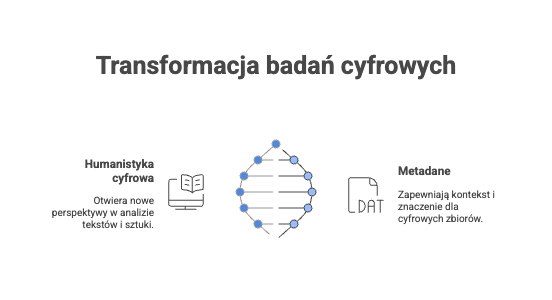
Digitization also represents a paradigm shift in scientific research. Digital collections are becoming databases that can be analyzed using algorithms and artificial intelligence. Digital humanities opens up new perspectives. – from automatic analysis of thousands of texts, through pattern recognition in art, to creating maps of historical data.
Metadata, which provides detailed information about the provenance, authorship, and production technique of objects, is crucial here. Without it, even the most accurate scan remains anonymous. Therefore, investing in standardization and metadata development is crucial to fully harness the potential of cultural research.
Digitalization as a driver of promotion and innovation
Digitization is not only about protection and science. It is also about new ways of popularizing culture, i.e. virtual museums, interactive exhibitions, educational platforms that engage audiences around the world.
Open digital resources are also becoming a fuel for the creative economy. Designers, game developers, filmmakers, and technology companies are using them to create new products and services. As a result, digitization is no longer merely a cost borne by cultural institutions, but an investment that drives innovation and economic development.
Challenges on the path to digital immortality
The digitization process is not without its challenges. The most important challenges include:
- copyright, which blocks access to many works (especially so-called orphan works),
- digitization and archiving costs, requiring stable and long-term sources of financing,
The solution is a strategic approach: investing in central repositories, developing competences in cultural institutions, simplifying legal regulations and ensuring long-term financing.
Digitizing cultural heritage is not an option, but a necessity. It protects assets from destruction, makes them universally accessible, supports science and innovation, and simultaneously strengthens a sense of community and identity. Every year of delay increases the risk of losing fragments of our history. Therefore, digitization should be treated not as a luxury, but as a priority of contemporary cultural policy.